


Urban guardrails play a very important role in cities
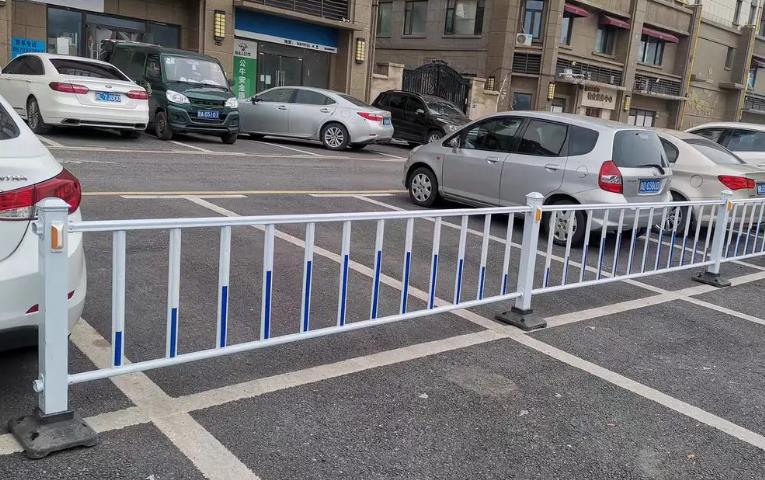
With the improvement of people's living standards, private cars are becoming increasingly popular. Nowadays, traffic safety has become a killer on the road, and the installation of guardrails has become a practical defense method!
In fact, the installation of urban guardrails greatly reduces the incidence of traffic accidents and lowers the safety of residents' travel. Highway guardrails have become various types of highway guardrails. According to stiffness, it can be divided into flexible guardrails, semi-rigid guardrails, and rigid guardrails.
Flexible guardrails generally refer to hard guardrail structures with significant buffering capacity. This is a structure fixed on a pillar by several steel cables with initial tension. It mainly relies on the tensile stress of the cable to resist collisions and absorb the energy of the vehicle. The cable works within the elastic range and basically does not need to be replaced. This type of guardrail has a beautiful appearance and no sense of pressure when driving, but its visual guidance effect is poor.
Semi rigid guardrails generally refer to continuous beam column guardrail structures. This is a beam structure with fixed pillars that relies on the bending deformation and tension of the guardrail to resist vehicle collisions. According to their different structures, beam guardrails can be divided into W-shaped corrugated beam guardrails, pipe beam guardrails, and box beam guardrails. They all have a certain degree of stiffness and toughness. They absorb collision energy through the deformation of the light beam. Damaged parts are easy to replace. Has a certain visual induction effect and a beautiful appearance.
Rigid guardrail generally refers to a basic non deformable guardrail structure. This is a concrete wall structure with a certain cross-sectional shape that absorbs collision energy through car climbing, deformation, and friction. Rigid guardrails do not deform during collisions, are almost undamaged, and have low maintenance costs, but they can create a sense of pressure on the vehicle's movement. It is easy to snow when used in cold regions.
After the installation of urban guardrails, zinc rich epoxy powder and UV resistant polyester powder are sprayed on the surface protective layer of highway and railway guardrails, forming a "long-lasting" coating. Its anti-corrosion ability is several tens of times that of other coatings and single-layer powder coatings, which belongs to high-tech content and is one of the highest in the world today.
-
How should traffic water horses be used correctly? Are there any regulations?
How should traffic water horses be used correctly? Are there any regulations?
How should traffic water horses be used correctly, and are there any regulations?
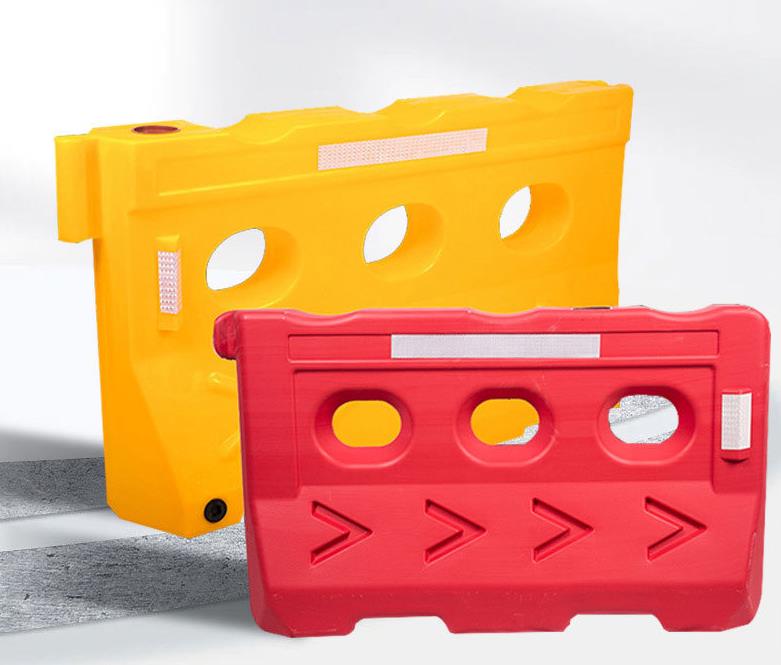
As a protective transportation facility product, the traffic water horse is a familiar product to many people because we have seen many places using water horses. Perhaps many people think of water horses as isolation piers, but their effects are basically the same. And how should we use water horses and set them up? Here are the requirements for setting up a water horse:
1. Water horse facilities should be installed in places such as roads, bridges, parking lots, stations, docks, shopping malls, gatherings, toll stations, etc. When it is necessary to separate traffic and pedestrian flow for a short period of time without any treatment to the roadbed.
2. Water horse facilities can be set up separately or continuously according to actual needs.
From the requirements for setting up water horses, we can see that the usage and production regulations for water horses are also centered around this requirement.
The requirements for setting up water horse products are as follows:
1. The product needs to pass the inspection of the National Road Traffic Safety Product Quality Supervision and Inspection Center and issue an inspection certificate.
2. The appearance color of the product is red and white or yellow and white, and the color cannot fade.
3. The interior of the product is hollow, so it is necessary to add water or sand when using it, which can give the product cushioning elasticity and more effectively absorb strong impact forces.
4. The material of the product is made of high-strength environmentally friendly plastic or fiberglass
5. The product should be easy to move and dismantle
2024-12-04MORE+ -
Set up some speed reduction signs on the road surface with cast steel speed bumps
Set up some speed reduction signs on the road surface with cast steel speed bumps
-
Factors to be considered in the design of road guardrails
Factors to be considered in the design of road guardrails
-
How should traffic water horses be used correctly? Are there any regulations?
How should traffic water horses be used correctly? Are there any regulations?
-
Daily maintenance methods for signs
Daily maintenance methods for signs